Personalized Dementia Care: The Advantages of Small Senior Care Homes
Business Name: BeeHive Homes of Maple Grove
Address: 14901 Weaver Lake Rd, Maple Grove, MN 55311
Phone: (763) 310-8111
BeeHive Homes of Maple Grove
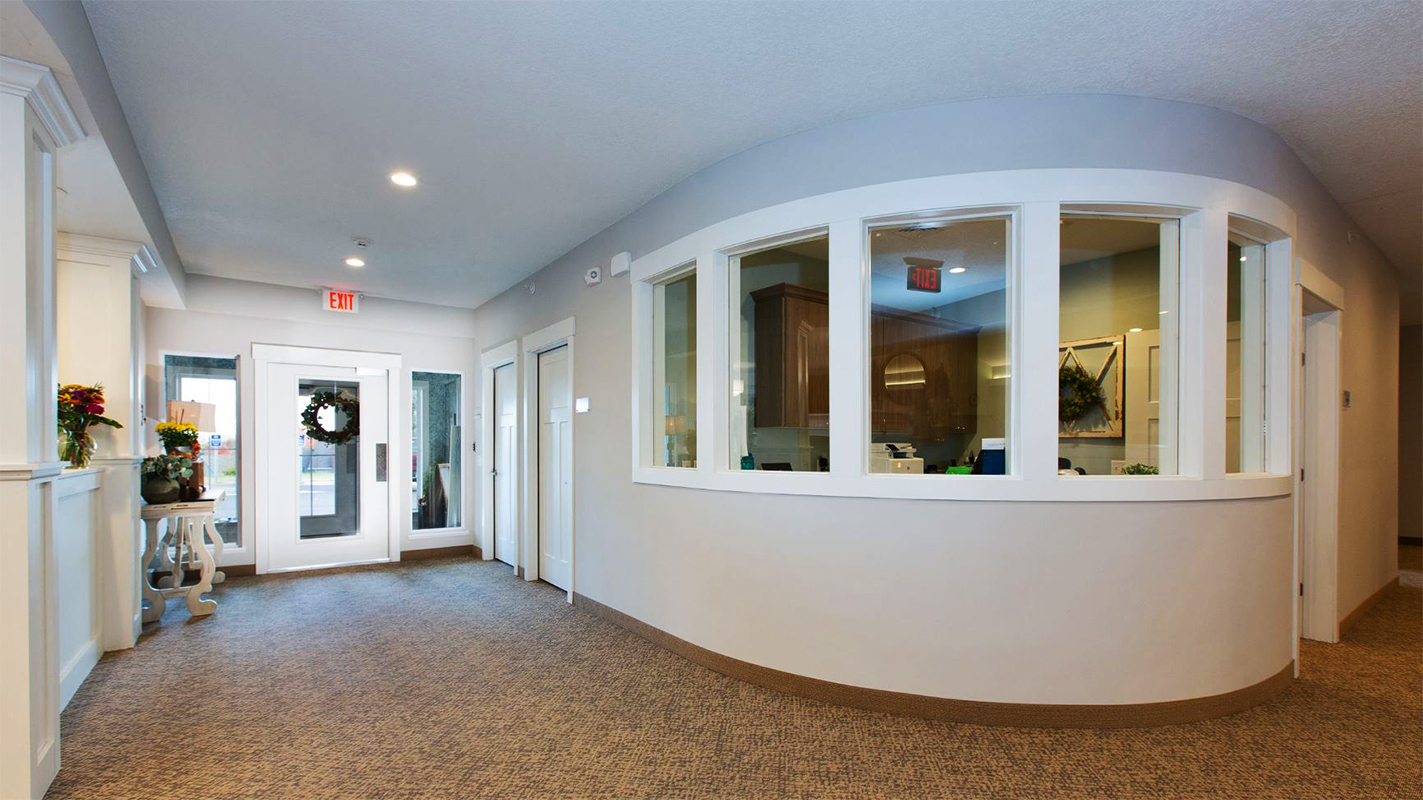
BeeHive Homes at Maple Grove is not a facility, it is a HOME where friends and family are welcome anytime! We are locally owned and operated, with a leadership team that has been serving older adults for over two decades. Our mission is to provide individualized care and attention to each of the seniors for whom we are entrusted to care. What sets us apart: care team members selected based on their passion to promote wellness, choice and safety; our dedication to know each resident on a personal level; specialized design that caters to people living with dementia. Caring for those with memory loss is ALL we do.
14901 Weaver Lake Rd, Maple Grove, MN 55311
Business Hours
Families usually start exploring dementia care when something specific shakes their self-confidence: a wandering incident during the night, a range left on, an abrupt hospitalization, or a caretaker partner lastly admitting, "I can not keep doing this alone." By the time individuals look beyond home care, they are exhausted, fretted, and overwhelmed by terminology like assisted living, memory care, respite care, and proficient nursing.
In that swirl of options, small senior care homes can be simple to miss out on. They go by lots of names: residential care homes, board and care, adult household homes, group homes. Whatever the label, the model is easy. Instead of a large center with dozens or numerous homeowners, you have a routine home in a community with possibly 4 to 10 locals and a small staff.
For many people dealing with dementia, those smaller settings match the way their brains now process the world: slower, more relational, more dependent on familiar rhythms than on complex schedules or large spaces. When succeeded, little homes can deliver highly personalized dementia care in a setting that feels less like a center and more like extended family.
What small senior care homes in fact are
From the outside, a residential care home often appears like any other single family house on the block. Inside, it is certified by the state to supply senior care, normally at an assisted living level. That typically consists of aid with activities such as bathing, dressing, grooming, medications, and meals.
Regulations differ by state, however key qualities tend to include:
- A restricted number of citizens, generally between 4 and 10.
- Staff present all the time, typically with awake over night caregivers.
- Private or semi-private bed rooms, shared typical areas, and home-style kitchens.
- A concentrate on everyday living instead of a heavy medical model, unless the home is accredited more like a nursing facility.
Many residential care homes specialize further in memory care. That may mean staff with additional dementia training, more safe environments to prevent risky wandering, and programming adjusted to cognitive limitations.
From a licensing perspective, these homes typically fall under the same umbrella as assisted living, however households experience them very in a different way. Rather of a lobby, long corridors, and a large dining-room, you discover a front door, a living-room, and a cooking area table.
Why dementia care is various from basic senior care
Good senior care supports physical security and day-to-day functioning. Excellent dementia care needs to go even more. It needs to create surroundings, routines, and relationships that reduce anxiety, assistance kept abilities, and protect self-respect in the face of progressive cognitive loss.
Dementia changes how an individual analyzes sound, space, time, and social hints. What feels mildly irritating to a cognitively healthy older adult can feel frustrating to somebody with amnesia or impaired judgment. A congested lobby, echoing corridors, or a brand-new staff member weekly can heighten confusion and agitation.
Three truths consistently form dementia care:
First, people with dementia typically lose short-term memory long in the past long-term memory. That implies they may not remember lunch, however they still acknowledge a long-loved hymn, the smell of cinnamon, or the method their partner used to fold towels.
Second, they end up being more conscious their environment. Unexpected sounds, cluttered spaces, or complex instructions can trigger distress or withdrawal.
Third, they rely heavily on caregivers to interpret their behavior. A resident who "declines to shower" might really be scared by a severe spray, unable to comprehend guidelines, or just cooled by the restroom. Caregivers who understand the individual's history and patterns can often uncover the genuine barrier and solve it without confrontation.
All of this tends to prefer settings where staff can really be familiar with each resident and where the physical environment is predictable and calm. That is where little senior care homes can shine.
How personalization operates in a small setting
Personalized dementia care is not a slogan on a pamphlet. It is a series of small, repeated actions that add up over days and months. In a small home, those actions are much easier to carry out due to the fact that the variety of individuals and variables is limited.
Consider early morning routines. In assisted living near me big structures with 80 or more residents, personnel often work on tight schedules: 10 or 15 people to help up, bathed, dressed, and ready for breakfast within a defined window. Even with caring staff, there is pressure to move rapidly. That can feel disconcerting for a resident with dementia who needs a slower rate and time to process.
In a home with 6 locals, staff may have much more flexibility. A single person can sleep in because he constantly loved late mornings. Another can shower after breakfast, when she feels more stable. Instead of a corridor of closed doors, personnel can hear when someone is stirring and adapt in real time.
Meals reveal the very same contrast. I have walked into big memory care dining-room where personnel tried their finest but had 20 citizens to hint and reroute. Compare that with a home where two caretakers prepare breakfast in an open kitchen area, know who likes oatmeal thin or thick, and notification early when somebody appears less starving than usual.
Personalization is not only about preference. It is also about medical subtlety. In dementia care, early signs of infection or pain can be simple to miss out on since the individual might not determine or reveal signs clearly. A caretaker who has actually been serving the same 5 residents for months is much more likely to identify a little change in gait, cravings, or sleep patterns.
Familiar, human-scale environments lower distress
The size and layout of a setting deeply impact how an individual with dementia browses the day. Large facilities typically offer many facilities: activity rooms, movie theaters, beauty salons, numerous dining choices. Those can be wonderful for some residents, particularly in early stages of cognitive decline.
As dementia advances, however, less can really be more. A person having problem with memory and orientation generally does much better with:
- Shorter distances between bedroom, restroom, and common areas.
- Clear sightlines, so they can see where to go instead of remember directions.
- Fewer choice points, such as which hallway or elevator to use.
A little senior care home naturally uses this sort of human-scale environment. You go out of your bed room and within a few steps you can see the living room, the kitchen area, and the nearest restroom. Rather of navigating floorings and wings, you browse a simple house.
Noise levels matter too. In a building with 60 residents, even a fairly calm day creates a great deal of sensory input: Televisions, intercoms, cleaning up devices, telephone call at the front desk, visitors reoccuring. In a home with 6 residents, the background sound may be meals in the sink, a radio at low volume, or peaceful discussion at the table.
For somebody with dementia, that difference can be the line between constant low-level agitation and bearable, foreseeable stimulation.
Relationships: depth rather than scale
The benefit of little homes is not simply less individuals. It is the chance for longer, deeper relationships in between citizens, staff, and families.
In big memory care or assisted living settings, staffing patterns and turnover can make it hard for households to even understand who is supplying the majority of the hands-on care. You might acknowledge the nurse or the lead aide, however the rotating shifts indicate your parent connects with lots of personnel over time.
In a residential care home, the core caregiving group may be fewer than 10 people total, including part-time personnel. Relative rapidly learn who is on early mornings, who deals with nights, who braids hair on Sundays, who likes to sing with locals. That familiarity constructs trust in both directions.
I have actually seen households deeply involved in little homes: generating special recipes, revealing personnel how Dad used to shave with his security razor, sharing favorite songs, even helping staff find out a couple of words of a resident's native language. Those personal details enter into the care plan, not simply side notes.
For the resident with dementia, the pay-off is a stable cast of characters. Deals with repeat, voices are identifiable, and personnel understand how to interpret each person's ways of revealing needs. A resident who frowns and tugs at his collar may be too warm. Another might be communicating discomfort. In a home with a handful of citizens, personnel can bring those mental maps and refine them over months and years.
Clinical security in a non-institutional setting
Families often stress that a small home can not manage complex dementia care requires safely. The reality is nuanced and depends upon good licensing, training, and scientific oversight.
Most small homes that concentrate on memory care offer:
- 24/ 7 personnel presence, frequently with awake over night caregivers.
- Medication administration, either by trained caregivers or licensed nurses, depending on state rules.
- Support with incontinence, mobility, feeding, and bathing.
- Coordination with outdoors providers such as doctors, home health, hospice, and physical therapy.
For many people dealing with dementia, these abilities are enough for most of their disease course. In truth, small homes often manage higher skill on the individual care side than numerous traditional assisted living communities, which in some cases have staffing ratios that make very hands-on care difficult.
The question is not whether a small home is "medical enough," however how it gets in touch with medical providers. A few of the best setups I have seen involve:
- A visiting nurse practitioner who rounds frequently, evaluates medications, and tracks chronic conditions.
- Established relationships with particular home health and hospice agencies.
- Clear procedures for falls, behavioral changes, and indications of infection.
- Direct phone access for families to speak to the owner or care coordinator.
There are edge cases. Someone on a ventilator, with unstable feeding tubes, or with complex wound care normally needs a knowledgeable nursing facility. The very same goes for locals with exceptionally unforeseeable aggression that threatens safety in a small environment. Good operators acknowledge those limitations early and help households plan shifts when needed.
Comparing big neighborhoods with little homes
Both conventional memory care communities and little residential care homes have a location in dementia care. The best choice depends on the individual's stage of disease, character, and family situation.
Here is a short, simplified contrast that families often find handy:
-
Environment. Big neighborhoods offer more features and activity areas, but they can feel busy, with long hallways and more transitions. Small homes feel familiar and compact, with less "moving parts" to navigate.
-
Social life. Larger settings can offer group activities, clubs, and wider social circles, particularly helpful for people in earlier phases who take pleasure in variety. Little homes typically promote quieter, more intimate interactions and might be much better fit to people who were never ever "group activity" people.
-
Staffing patterns. In big neighborhoods, there may be on-site nurses and more layers of management, however direct caretakers often cover larger ratios. In small homes, ratios are usually lower, and the same staff connect with the exact same citizens daily, though there may be less medical staff on site.
-
Flexibility. Big organizations in some cases have rigorous schedules for meals, bathing, and activities to collaborate numerous residents. Little homes can frequently adapt regimens to individual sleep patterns, preferences, and moods, particularly handy for people with dementia who do best when the day flexes to their internal rhythms.
-
Cost and transparency. Costs vary widely. Some big communities charge lower base rates but add significant fees as care requirements increase. Lots of small homes utilize more inclusive prices or simpler tiered designs. Since the setting is smaller sized, households often feel they can see more plainly what they are paying for.
Neither design is naturally better. The fit depends upon the individual. I have actually seen extroverted former teachers prosper in large memory care programs filled with discussion and structured activities. I have also seen introverted engineers unwind visibly when moved from a big structure to a quiet home with one TV and a garden.
Where respite care fits in
Family caregivers sometimes feel that picking a long-term senior care option is all-or-nothing. In truth, respite care stays can be an essential bridge, specifically when you are checking out small homes.
Respite care is short-term, generally from a few days as much as a month or more. Some little senior care homes keep one room readily available for respite. Others convert an open long-term bed into a respite opportunity in between long-lasting residents.
Short stays can assist in numerous ways:
They give the person with dementia a possibility to try a new environment without the psychological weight of "this is forever." Households often find that the shift goes much better than expected in a little, home-like setting.
They provide much-needed rest for partners or adult kids who are nearing burnout but not ready to commit to permanent placement.
They provide a real-world test. You see how staff deal with nighttime wandering, individual care, and interaction. You can observe meals, hygiene, and state of mind modifications throughout a number of days instead of a single tour.
If you are seriously thinking about a little home for long-term dementia care, inquiring about respite options is sensible, even if you do not utilize them right away.
Trade-offs and restrictions of small senior care homes
No setting is perfect. Small homes included genuine trade-offs that should have clear-eyed discussion.
One restriction is staffing depth. In a house with 6 locals, if one caregiver calls out ill, there is less redundancy than in a 100-bed facility. Excellent operators plan for this with backup staff and on-call systems, however households must still ask particular concerns about coverage.
Another is facilities. If your loved one really takes pleasure in organized activities, on-site therapy health clubs, or a buzzing social environment, a small home may feel too peaceful. Some homes generate going to musicians, pet therapy, or exercise trainers, but the scale is smaller.
Regulation and oversight vary by state. While most jurisdictions certify residential care homes, the intensity of inspections and reporting can vary from what you see in larger senior care settings. This makes it specifically important to visit often, see closely, and trust your observations.
Lastly, place can be a compromise. Lots of small homes are in residential neighborhoods that might be farther from major health centers or from where member of the family live. For some families, regular going to outweighs other elements, leading them toward bigger centers more detailed to home.
Good decision-making means weighing these truths versus the benefits of customization, environment, and relationship-based care.
What to try to find when visiting a small dementia care home
Choosing any senior care setting is part fact-finding, part gut impulse. With small homes, the "feel" of the location is specifically substantial, due to the fact that the environment makes love and your loved one will be sharing a living room and cooking area with a handful of people.
Here is a concise list lots of households find useful when visiting little homes:
- Listen and sniff at the front door. A faint odor of lunch is typical. Strong odors of urine, bleach, or heavy air freshener are warning signs.
- Watch staff-resident interactions for at least 20 minutes. Do people speak respectfully, utilize homeowners' names, and make eye contact, or do they discuss them?
- Ask specific questions about dementia training. General "we have experience" is insufficient. Try to find official training hours, ongoing education, and examples of how they handle agitation or sundowning.
- Observe whether locals look groomed, appropriately dressed, and engaged at their own level, whether that means chatting, listening to music, or merely sitting comfortably.
- Clarify medical and behavioral boundaries. Ask clearly what type of needs would activate a recommendation to relocate to a higher level of care, such as severe aggression, regular hospitalizations, or feeding tubes.
Do not rush. Visit at different times if you can, consisting of nights or weekends. If the home appears perfect on paper but you feel uneasy after two visits, honor that instinct and keep looking.
Supporting self-respect and identity through the small things
Dementia slowly strips away obvious markers of independence. Driving, handling cash, cooking, and complicated decision-making fall away. Yet within those losses remains a person with long-lasting practices, preferences, and values.
Small senior care homes are uniquely placed to protect that inner identity through small acts that would be tough to sustain at scale. I have actually seen:
A retired farmer in a residential care home who invested mornings "inspecting the fence," which in useful terms meant strolling the backyard border with a team member. That ten-minute routine, built into his daily routine, soothed his restlessness and honored his sense of responsibility.
A former choir singer whose caretaker put on old hymn recordings every Sunday morning and welcomed her to "assist lead." Her words were garbled by that point, however the light in her eyes was unmistakable.
A lady who constantly prided herself on hospitality. Personnel gave her a role "setting the table" for meals with brilliantly colored, solid meals. Tasks were adjusted for safety, however the role was real.
Those minutes are not bonus. For someone living with dementia, they are the core of good care. Small homes, with closer staff-resident ratios and less rigid schedules, can weave such rituals into every day life more easily than large institutions.
When a bigger setting might be the better fit
It is very important to acknowledge that small is not constantly better. Some people and households will be well served by larger assisted living or memory care communities.
You might lean toward a larger setting if:
Your loved one remains in the earlier stages of dementia, still extremely social, and prospers on structured activities, trips, and range. Larger neighborhoods typically provide more programming options each day.
The person has substantial medical needs best monitored by on-site nursing or immediate access to a more comprehensive clinical team, such as frequent IV medications or very complex chronic disease management.
Your family requires or values proximity above all else. If the only small homes are an hour away, but a good memory care community is ten minutes from your home, the capability to visit a number of times a week might exceed other factors.
You anticipate that your loved one may need a greater level of care quickly, and you want to prevent another relocation. Some larger companies supply a continuum from assisted living to memory care to competent nursing, which can streamline future transitions.
The decision is rarely clean-cut. Many families ultimately select a small residential care home, then later shift to a nursing center when dementia is extremely sophisticated and medical intricacy controls. That is not a failure. It is an adaptation to altering needs.
Bringing it back to what matters most
Words like assisted living, memory care, respite care, and senior care can make choices feel abstract, as if you are choosing in between service plans. Underneath the labels lies a human truth: somebody you love, dealing with a brain illness that is gradually changing who they seem on the outside, even as their core self remains.
Small senior care homes will not reverse dementia or eliminate its hardest days. What they can frequently do, when well run, is make every day life more gentle:
Fewer strangers at the bedside. More familiar faces in the kitchen.
Less walking down long hallways questioning where you are. More sitting in a living-room where you gradually know every corner.
Fewer rushed showers at scheduled times. More chances to follow your own rhythm.
Behind the regulations and organization designs, that is what households are really looking for: a place where their loved one with dementia can still be known as an individual, not a space number. Little senior care homes, with their concentrate on individualized relationships and human-scale living, are among the most effective tools we have to make that possible.
BeeHive Homes of Maple Grove provides assisted living care
BeeHive Homes of Maple Grove provides memory care services
BeeHive Homes of Maple Grove is a memory care home for seniors
BeeHive Homes of Maple Grove provides respite care services
BeeHive Homes of Maple Grove offers 24-hour support from professional caregivers
BeeHive Homes of Maple Grove offers private bedrooms with private bathrooms
BeeHive Homes of Maple Grove provides medication monitoring and documentation
BeeHive Homes of Maple Grove serves dietitian-approved meals
BeeHive Homes of Maple Grove provides housekeeping services
BeeHive Homes of Maple Grove provides laundry services
BeeHive Homes of Maple Grove offers community dining and social engagement activities
BeeHive Homes of Maple Grove features life enrichment activities
BeeHive Homes of Maple Grove supports personal care assistance during meals and daily routines
BeeHive Homes of Maple Grove promotes frequent physical and mental exercise opportunities
BeeHive Homes of Maple Grove provides a home-like residential environment
BeeHive Homes of Maple Grove creates customized care plans as residents’ needs change
BeeHive Homes of Maple Grove assesses individual resident care needs
BeeHive Homes of Maple Grove accepts private pay and long-term care insurance
BeeHive Homes of Maple Grove assists qualified veterans with Aid and Attendance benefits
BeeHive Homes of Maple Grove encourages meaningful resident-to-staff relationships
BeeHive Homes of Maple Grove delivers compassionate, attentive senior care focused on dignity and comfort
BeeHive Homes of Maple Grove has a phone number of (763) 310-8111
BeeHive Homes of Maple Grove has an address of 14901 Weaver Lake Rd, Maple Grove, MN 55311
BeeHive Homes of Maple Grove has a website https://beehivehomes.com/locations/maple-grove/
BeeHive Homes of Maple Grove has Google Maps listing https://maps.app.goo.gl/n99VhHgdH879gqTH8
BeeHive Homes of Maple Grove has Facebook page https://www.facebook.com/BeeHiveMapleGrove
BeeHive Homes of Maple Grove won Top Memory Care Homes 2025
BeeHive Homes of Maple Grove earned Best Customer Service Award 2024
BeeHive Homes of Maple Grove placed 1st for Senior Living Memory Care Communities 2025
People Also Ask about BeeHive Homes of Maple Grove
What is the monthly room rate at BeeHive Homes of Maple Grove?
The monthly rate depends on each resident’s care needs, room selection, and personalized care plan. Before move-in, we complete an initial assessment to better understand your loved one’s health, safety, mobility, personal care, and memory care needs. From there, we provide clear pricing based on the level of support required. Our goal is to keep families informed with transparent pricing and no hidden fees.
Does BeeHive Homes of Maple Grove only offer Memory Care?
BeeHive Homes of Maple Grove offers enhanced assisted living with specialized memory care support. We are experienced in caring for seniors living with Alzheimer’s, dementia, and other forms of memory loss, while also welcoming residents who may not have a dementia diagnosis but would benefit from a secure, highly personalized care environment. Our homelike setting is especially helpful for seniors who are earlier in their dementia journey, as well as those who need extra structure, daily support, meaningful routines, and compassionate oversight. Each resident receives care tailored to their needs, helping them feel safe, supported, and truly at home.
Can residents stay at BeeHive Homes through the end of life?
In many cases, yes. Our goal is to help residents remain in a familiar, comforting environment for as long as we can safely meet their needs. There may be exceptions if a resident requires 24-hour skilled nursing services or has needs that cannot be safely supported in our memory care setting. When care needs change, our team works closely with families, physicians, hospice providers, and other care professionals to help make the next step as smooth and compassionate as possible.
Do you have nurses on staff?
Yes. BeeHive Homes of Maple Grove has a team of Registered Nurses who provide care oversight, assessments, care planning, and coordination with other healthcare professionals. The typical RN schedule is Monday through Friday from 7:00 AM to 6:00 PM and weekends from 9:00 AM to 5:30 PM, with a Registered Nurse on call after hours. This helps families feel confident that their loved one’s changing memory care needs are being monitored with attention and compassion.
What are the visiting hours at BeeHive Homes of Maple Grove?
Family and friends are welcome to visit anytime. Because routine is especially important for residents with memory loss, we encourage visitors to avoid scheduled meal times when possible: 8:00 AM, 11:30 AM, and 4:30 PM. Visits are an important part of helping residents feel connected, loved, and at home.
Are the rooms private?
Yes. Residents enjoy private memory care suites with fully accessible bathrooms. Families are encouraged to personalize the room with familiar furniture, photos, keepsakes, and comforting touches that help the space feel like their loved one’s own. BeeHive Homes of Maple Grove also offers accommodations for couples who wish to remain together, depending on availability./p>
How do I schedule a tour or learn more?
You can call BeeHive Homes of Maple Grove at 763-310-8111 to ask questions, discuss availability, or schedule a personal tour. Visiting in person is one of the best ways to experience the warmth of the home, meet the care team, and see whether BeeHive Homes is the right fit for your loved one.
What makes BeeHive Homes of Maple Grove different from larger memory care communities?
BeeHive Homes of Maple Grove offers memory care in a smaller, more personal residential setting. Residents are known by name, supported according to their individual routines, and cared for in a warm environment that feels like home. From private suites and home-cooked meals to life enrichment activities and secure spaces, our approach is centered on comfort, dignity, and meaningful connection.
Where is BeeHive Homes of Maple Grove located?
BeeHive Homes of Maple Grove is conveniently located at 14901 Weaver Lake Rd, Maple Grove, MN 55311. You can easily find directions on Google Maps or call at (763) 310-8111 Monday through Sunday 7am to 7pm.
How can I contact BeeHive Homes of Maple Grove?
You can contact BeeHive Homes of Maple Grove by phone at: (763) 310-8111, visit their website at https://beehivehomes.com/locations/maple-grove, or connect on social media via Facebook
Weaver Lake Community Park provides a serene lakeside walk perfect for assisted living and memory care residents to enjoy fresh air and gentle scenery during senior care and respite care outings.